
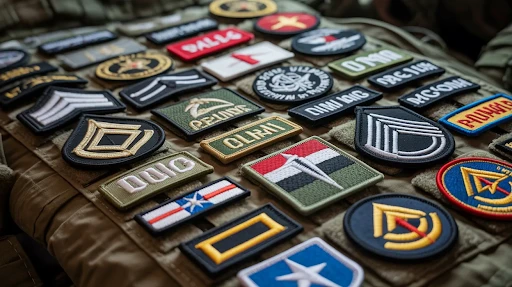
Military patches are small pieces of fabric, rubber, or woven thread, but they carry a lot of weight.
A patch can show a unit, rank, mission, country, deployment history, branch, team identity, or a private joke shared by people who have been through the same grind. On a uniform, it has rules. On a plate carrier, range bag, backpack, hat, or jacket, it becomes a personal statement. That is why military patches are not just “cool designs.” They need the right size, color, backing, material, and placement.
This guide breaks down military patches in plain English. You will learn what they mean, where they go, which type to choose, what OCP patches are, how morale patches differ from official insignia, and how to order custom military patches without making design mistakes.
What Are Military Patches?
Military patches are identification or decorative emblems used on uniforms, tactical gear, jackets, bags, caps, and commemorative items. They can represent a military unit, branch, rank, country, mission, veteran status, morale design, law enforcement agency, tactical team, or special event.
Most military-style patches are made as embroidered patches, PVC patches, woven patches, or printed patches. For uniforms and tactical gear, Velcro backing is common because it allows patches to be removed, switched, or replaced quickly.
Why Military Patches Matter
A good military patch does three jobs at once.
It identifies. It tells people who someone belongs to, what role they hold, or what unit they serve with.
It honors. Veteran patches, memorial patches, deployment patches, and commemorative designs often carry names, dates, mottos, or symbols that mean something to the people wearing them.
It builds morale. A morale patch can be serious, funny, sarcastic, bold, or low-profile. On a range bag or tactical vest, it gives gear personality without needing a long explanation.
That is why patch quality matters. If the lettering is muddy, the colors are off, or the backing fails after a few wears, the patch loses its purpose fast.
Types of Military Patches
Military patches cover a wide range of uses. Some are official uniform insignia. Others are custom, collectible, decorative, tactical, or commemorative.
| Type of Military Patch | What It Means | Common Use |
| Unit Patches | Represents a unit, division, brigade, squadron, ship, team, or command | Uniforms, jackets, shadow boxes, tactical gear |
| Combat Patches | Represents qualifying wartime or hostile-condition service, depending on official rules | Authorized uniforms |
| Morale Patches | Shows humor, identity, attitude, team pride, or inside-unit culture | Plate carriers, bags, range gear, jackets |
| Flag Patches | Shows national identity, often full-color or subdued | Uniforms, tactical gear, caps, bags |
| Rank Patches | Displays rank or grade | Uniforms and tactical uniforms |
| Name Patches and Name Tapes | Identifies a person or team member | Uniform shirts, jackets, bags |
| Branch Patches | Represents Army, Navy, Air Force, Marines, Coast Guard, Space Force, or related branch identity | Apparel, memorabilia, gear |
| Veteran Patches | Shows prior service, campaign, branch, or retired status | Jackets, hats, motorcycle vests, displays |
| Police and Law Enforcement Patches | Identifies department, tactical unit, badge-style emblem, or role | Police uniforms, tactical vests, collector patches |
| Commemorative Patches | Marks an event, deployment, memorial, fundraiser, or limited run | Collectibles, reunions, gifts, ceremonies |
For most buyers, the best starting point is simple: decide whether the patch is for an official uniform, tactical use, casual wear, or commemoration. That one choice affects everything else.
Military Patch Meanings: What Do the Symbols Stand For?
Military patches use symbols because symbols are faster than words. A person can glance at a patch and understand strength, speed, defense, aviation, intelligence, infantry, medical support, or command history.
Common military patch symbols include:
| Symbol | Common Meaning |
| Eagle | Freedom, command, national service, strength |
| Sword | Readiness, combat power, defense |
| Shield | Protection, security, law enforcement, resilience |
| Lightning Bolt | Signal, speed, communications, electronic warfare |
| Wings | Aviation, airborne operations, air mobility |
| Star | Service, honor, rank, national identity |
| Skull | Danger, grit, morale, tactical humor |
| Anchor | Navy, maritime service, stability |
| Cross or Medical Symbol | Medical support, rescue, care |
| Arrowhead | Direction, mission focus, movement |
| Laurel | Achievement, honor, victory |
| Globe | Worldwide operations, expeditionary role |
Colors matter too. Full-color patches are easier to read and better for display, jackets, hats, and collectors. Subdued patches use tactical colors like black, coyote brown, olive drab, ranger green, spice brown, or tan so they blend with uniforms and gear.
Official Military Patches vs Custom Military Patches
This is where people often get confused.
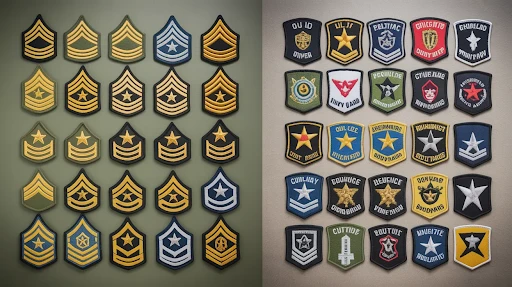
Official military patches are tied to branch rules, unit authorization, uniform regulations, and eligibility. Examples include official unit insignia, rank insignia, combat patches, service identifiers, and certain authorized badges.
Custom military patches are made for teams, veterans, tactical clubs, collectors, airsoft groups, reenactment groups, events, businesses, family gifts, fundraisers, and morale use. They can be inspired by military style without copying protected insignia or implying an award, rank, or service status the wearer has not earned.
A safe rule: make custom military patches personal, commemorative, or team-based. Do not create designs that falsely suggest someone earned a military decoration, combat badge, official rank, or unit affiliation.
Who Can Wear Military Patches?
Active-duty military personnel must follow their branch regulations, command guidance, and unit rules. The same goes for National Guard, Reserve, cadets, and certain uniformed personnel.
Veterans often wear military patches on jackets, hats, vests, shadow boxes, and memorial displays. That is common and respectful when the patch reflects real service, branch connection, or commemorative use.
Civilians can wear military-inspired, morale, tactical, patriotic, and novelty patches. The key is not to impersonate a service member, falsely claim rank, or present unearned awards as real.
Collectors can buy and display military patches, including vintage patches, unit patches, and commemorative designs. Displaying a patch in a collection is different from wearing it to claim status.
Military Patch Etiquette: Simple Rules That Keep It Respectful
Military patches can be personal. Some represent sacrifice, service, deployment history, or fallen teammates. Keep the design and use respectful.
Follow these guidelines:
| Do | Avoid |
| Use custom morale designs for bags, hats, tactical gear, and casual apparel | Wearing patches that falsely imply rank, combat service, or official status |
| Ask unit leadership before making patches for active-duty teams | Copying official insignia without permission |
| Use subdued colors for tactical use | Making tiny text that cannot be read from a few feet away |
| Use Velcro backing for removable patches | Using iron-on backing on heavy tactical gear |
| Keep memorial patches clean and simple | Turning memorial or veteran designs into jokes |
| Use original artwork when possible | Pulling official seals or badges from the internet and printing them as-is |
Respect is the difference between a sharp military-style patch and a bad-looking imitation.
Where Do Military Patches Go?
Patch placement depends on the uniform, gear, and purpose. Official uniforms have strict rules. Civilian tactical gear and apparel are more flexible.
| Placement Area | Common Patch Type | Best Backing |
| Left Shoulder | Unit patch or team patch | Velcro or sew-on |
| Right Shoulder | Flag patch, combat-style patch, morale patch, or tactical identifier | Velcro |
| Chest | Name tape, rank patch, branch patch | Velcro or sew-on |
| Plate Carrier | Blood type patch, call sign, morale patch, IR patch | Velcro |
| Tactical Bag | Morale patch, name patch, flag patch | Velcro |
| Jacket Sleeve | Veteran patch, unit patch, commemorative patch | Sew-on |
| Hat or Cap | Flag, unit, morale, or logo patch | Sew-on, Velcro, or heat press depending on material |
| Motorcycle Vest | Veteran, memorial, unit-inspired, patriotic patch | Sew-on |
| Shadow Box | Unit, rank, name, deployment, or memorial patch | No backing or sew-on |
If the patch is going on real uniform items, check official guidance first. If it is going on a tactical backpack, range bag, jacket, or cap, placement is usually based on visibility, balance, and available Velcro space.
What Is a Combat Patch?
A combat patch usually refers to a shoulder sleeve insignia worn by eligible U.S. Army soldiers for military operations in hostile conditions. In simple terms, it represents service with a unit during qualifying operations.
This is not the same as a casual morale patch or a custom veteran patch. A combat patch has eligibility rules. Not everyone can wear one on an official uniform just because they like the design.
For civilian apparel, collectors, displays, gifts, and veteran memorabilia, the safest approach is to treat combat-style patches as commemorative unless the wearer is actually entitled to wear them in an official context.
What Are OCP Patches?
OCP patches are patches made for Operational Camouflage Pattern uniforms and gear. They usually use subdued colors so they blend with tactical fabric.
Common OCP patch colors include:
| OCP Patch Color | Best For |
| Spice Brown | Air Force-style subdued patches and OCP gear |
| Black | Army-style subdued lettering and symbols |
| Coyote Brown | Tactical bags, vests, jackets, and desert-toned gear |
| Olive Drab | Green tactical gear, field bags, and ranger-style apparel |
| Ranger Green | Modern tactical setups and low-profile gear |
| Tan | Desert, coyote, and multicam gear |
| Gray | Police, SWAT, and urban tactical designs |
OCP patches usually work best with hook-and-loop backing. That makes them easy to attach to uniforms, plate carriers, tactical backpacks, range bags, and caps with loop panels.
Morale Patches: The Fun Side of Military Patch Culture
Morale patches are the patches people remember.
They can be funny, dark, sarcastic, motivational, patriotic, or mission-themed. Some are unit jokes. Some are tactical memes. Some are simple icons with no text. Others use phrases, mascots, call signs, or inside references.
Popular morale patch ideas include:
| Morale Patch Style | Example Direction |
| Funny Morale Patches | Sarcastic phrases, range humor, coffee jokes, “no step on snack” style humor |
| Tactical Morale Patches | Skulls, helmets, shields, night vision graphics, call signs |
| Patriotic Morale Patches | U.S. flag, eagle, stars, constitutional themes |
| Unit Morale Patches | Mascot, motto, mission phrase, deployment joke |
| Police Morale Patches | K9, SWAT, thin blue line styling, badge-inspired art |
| Veteran Morale Patches | Branch pride, retirement jokes, service humor |
| Airsoft and MilSim Patches | Team logo, role patch, squad number, faction badge |
Morale patches are usually made with Velcro backing because people like swapping them across bags, vests, caps, jackets, and gear panels.
For rugged morale designs, custom PVC patches are a strong choice because they handle mud, rain, abrasion, and outdoor use better than thread-based patches.
Embroidered Military Patches
Custom military embroidered patches have the classic raised thread look. They are the right choice when you want a traditional uniform feel, bold outlines, strong borders, and a durable finish.
Best uses for embroidered military patches:
| Best Use | Why Embroidery Works |
| Unit-Inspired Patches | Classic military look |
| Veteran Jackets | Strong texture and long-term wear |
| Flag Patches | Bold thread detail |
| Name Patches | Clean lettering with the right font size |
| Commemorative Patches | Premium, stitched feel |
| Police and Fire Patches | Traditional uniform appearance |
If your design uses thick lettering, simple symbols, bold borders, or a shield shape, custom embroidered patches are usually the safest pick.
One warning: embroidery has limits. Very tiny lettering, thin lines, small dates, and complex gradients can get messy in thread. For high-detail artwork, woven or PVC may work better.
PVC Military Patches
Custom PVC military patches are soft rubber-style patches made for tough conditions. They are popular for tactical gear, outdoor use, police units, airsoft teams, range bags, and morale patches.
Best uses for PVC military patches:
| Best Use | Why PVC Works |
| Tactical Patches | Water-resistant and easy to clean |
| Morale Patches | Sharp shapes and bold 2D or 3D effects |
| Range Bags | Handles friction and outdoor use |
| Plate Carriers | Strong with Velcro backing |
| Police and K9 Patches | Durable for field conditions |
| Outdoor Gear | Resists mud, rain, and sunlight better than thread |
PVC is the right choice when the patch needs to survive rough handling. It also works well for glow-in-the-dark, reflective, 3D, or layered designs.
Woven Military Patches
Custom military woven patches are made with thinner threads than embroidered patches. That means they can show finer lettering, sharper lines, and more detail.
Best uses for woven military patches:
| Best Use | Why Woven Works |
| Small Text | Thin threads make letters clearer |
| Detailed Unit Art | Better for complex symbols |
| Name Tapes | Flat, sharp finish |
| Flag Details | Clean small elements |
| Collectible Patches | Smooth, premium feel |
| Modern Tactical Branding | Less bulky than embroidery |
Choose custom woven patches when you need crisp details without a raised stitched surface.
Sew-On, Velcro, Iron-On, and Adhesive Backing
Backing is not a small detail. It decides how the patch behaves once it is on the uniform, jacket, cap, or gear.
| Backing Type | Best For | Not Best For |
| Velcro or Hook-and-Loop | OCP patches, tactical gear, plate carriers, bags, and removable patches | Thin fashion fabrics with no loop panel |
| Sew-On | Jackets, uniforms, vests, hats, permanent placement | Quick temporary use |
| Iron-On | Casual apparel, simple jackets, lightweight garments | Tactical gear, heat-sensitive fabric, rough field use |
| Adhesive | Events, temporary badges, short-term use | Long-term uniforms or outdoor gear |
| No Backing | Collectors, shadow boxes, displays | Wearable use unless sewn later |
For serious uniform and tactical use, Velcro and sew-on are the two most practical choices. Sew-on patches are best when the patch should stay in place permanently. Velcro is best when the patch needs to be swapped, removed, washed separately, or used across different gear.
Best Patch Material by Use Case
| Use Case | Best Patch Type | Recommended Backing |
| Official-Style Unit Patch | Embroidered or woven | Sew-on or Velcro |
| OCP Patch | Embroidered, woven, or PVC | Velcro |
| Morale Patch | PVC or embroidered | Velcro |
| Police Patch | Embroidered or PVC | Sew-on or Velcro |
| Tactical Gear Patch | PVC | Velcro |
| Veteran Jacket Patch | Embroidered | Sew-on |
| Name Tape | Woven or embroidered | Velcro or sew-on |
| Memorial Patch | Embroidered or woven | Sew-on or no backing |
| Airsoft Team Patch | PVC or embroidered | Velcro |
| Collector Patch | Woven or embroidered | No backing or sew-on |
Military Patch Shapes and Borders
Military patches often use strong, easy-to-recognize shapes.
Common shapes include:
| Shape | Best For |
| Shield | Police, security, defense, official-style patches |
| Circle | Morale patches, unit patches, aviation patches |
| Rectangle | Name tapes, flag patches, rank patches |
| Tab | Ranger-style, role, motto, or top/bottom text |
| Chevron | Rank-inspired designs and tactical identity |
| Custom Die-Cut | Mascots, skulls, animals, weapons, vehicles, aircraft |
Border choice also matters.
Merrowed borders are thick, rounded, and traditional. They work best for circles, shields, squares, and rectangles.
Laser-cut borders are cleaner for custom shapes, sharp edges, and modern tactical designs.
Satin stitch borders are smoother than merrowed borders and work well for detailed embroidered patches.
Military Patch Size Guide
Military Patch Size Guide
| Patch Type | Common Size Range |
| Shoulder Patch | 3 to 4 inches |
| Morale Patch | 2 x 3 inches or 3 x 3 inches |
| Flag Patch | Around 2 x 3 inches |
| Name Tape | Around 1 x 5 inches |
| Rank Patch | 2 inches or smaller, depending on layout |
| Hat Patch | 2 to 3 inches wide |
| Back Jacket Patch | 8 to 12 inches or larger |
| Plate Carrier Patch | Depends on the loop panel size |
Do not guess the size. Measure the area first. A patch that looks great on a screen can look oversized on a sleeve or too small on a vest.
How to Design Custom Military Patches That Look Professional
A military patch needs discipline in its design. Too many colors, tiny words, and crowded symbols make it look amateur.
Use this checklist before placing an order:
| Design Element | Best Practice |
| Text | Keep it short and readable |
| Font | Use bold, blocky, military-style lettering |
| Colors | Use full color for display, subdued colors for tactical use |
| Symbols | Pick one main symbol instead of five small ones |
| Border | Use merrowed for classic shapes and laser-cut for custom shapes |
| Contrast | Make sure letters stand out from the background |
| Size | Match the garment or gear panel |
| Backing | Choose Velcro for tactical use and sew-on for permanent wear |
| Artwork | Use vector art when possible |
A clean patch beats a crowded patch every time.
Military Patch Color Ideas
For tactical and OCP-style patches:
| Color Combination | Best Use |
| Black on OCP | Army-style subdued patches |
| Spice Brown on OCP | Air Force-style subdued patches |
| Coyote and Black | Plate carriers, range bags, tactical hats |
| Olive Drab and Black | Field bags, outdoor gear, ranger-style patches |
| Ranger Green and Tan | Modern tactical apparel |
| Gray and Black | Police, security, SWAT-inspired patches |
| Full Color | Display, jackets, hats, and collector patches |
For veteran and commemorative patches, full color often works better because details, names, and dates matter more than concealment.
Police Patches and Law Enforcement Patches
Police patches sit close to military patch culture because both use symbols, hierarchy, identity, and uniform standards.
Common law enforcement patch types include:
| Patch Type | Common Use |
| Department Patches | Police uniforms and formal identification |
| SWAT Patches | Tactical vests, bags, and unit gear |
| K9 Patches | Handler gear, dog harnesses, unit merch |
| Sheriff Patches | Uniforms, hats, jackets |
| Security Patches | Commercial uniforms and event security |
| Thin Blue Line Patches | Support, morale, and commemorative use |
| Badge-Style Patches | Jackets, uniforms, collector patches |
For police and law enforcement patches, keep the artwork sharp and readable. Shield shapes, city names, department identifiers, and badge-inspired borders work well. For tactical use, PVC and Velcro are practical. For formal uniform use, embroidered sew-on patches are still the classic option.
Military Patches for Veterans, Reunions, and Memorials
Veteran patches deserve careful design.
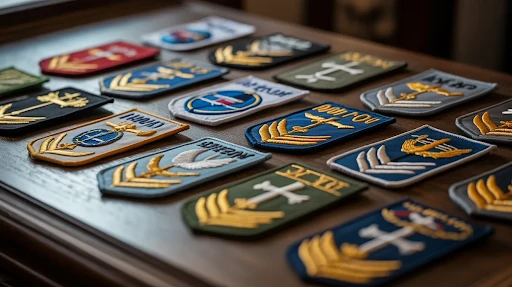
A veteran patch may include branch, unit, years of service, deployment name, ship name, squadron number, or a meaningful motto. A memorial patch may include a name, date, call sign, cross, wings, flag, ribbon, or unit symbol.
For these patches, avoid clutter. The design should be readable, respectful, and built to last.
Good veteran patch ideas include:
| Patch Idea | Design Direction |
| Retired Service Patch | Branch name, years, flag, simple emblem |
| Unit Reunion Patch | Unit name, reunion year, location |
| Memorial Patch | Name, dates, call sign, quiet symbol |
| Deployment Patch | Operation name, location, year |
| Family Tribute Patch | “Proud Army Dad,” “Marine Mom,” “Veteran Owned” |
| Motorcycle Vest Patch | Large embroidered back patch or sleeve patch |
For jackets and vests, sew-on patch vs iron-on patch because it holds up over time.
Custom Military Patches for Airsoft, MilSim, and Tactical Teams
Airsoft and MilSim players often want military-style patches without copying real official insignia. This is where custom artwork matters.
Good MilSim patch ideas include:
| Patch Type | Good Direction |
| Team Patch | Original mascot, initials, state, number |
| Role Patch | Medic, sniper, squad lead, breacher |
| Faction Patch | Fictional shield, animal, skull, eagle, or geometric mark |
| Morale Patch | Funny phrase, call sign, inside joke |
| Event Patch | Game name, date, location, team side |
For airsoft and tactical hobby use, Velcro PVC patches are usually the best choice. They are durable, easy to remove, and look sharp on plate carriers and gear panels.
How to Order Custom Military Patches
Ordering custom military patches is easier when you understand the custom patch breakdown first, before production starts.
Use this order checklist:
| Detail | What to Decide |
| Patch Type | Embroidered, PVC, woven, printed, leather, chenille |
| Size | Width and height in inches |
| Shape | Circle, shield, rectangle, tab, custom die-cut |
| Quantity | Sample, small batch, team order, bulk order |
| Colors | Full color, subdued, OCP, black, tan, coyote, OD green |
| Backing | Velcro, sew-on, iron-on, adhesive, no backing |
| Border | Merrowed, satin stitch, laser-cut |
| Text | Unit name, motto, date, call sign, rank, location |
| Artwork | Logo, sketch, AI, EPS, PDF, PNG, JPG |
| Deadline | Standard or rush timeline |
A good patch maker should send a digital proof before production. Never skip the proof. That is where you catch spelling errors, bad contrast, wrong colors, and sizing issues before the patch is made.
Common Military Patch Mistakes to Avoid
| Mistake | Why It Hurts the Patch |
| Too much tiny text | It becomes unreadable when stitched or molded |
| Low contrast colors | The patch looks dull from a distance |
| Wrong backing | The patch fails on the gear or garment |
| Copying official insignia blindly | Can create legal, ethical, or approval issues |
| Choosing embroidery for very detailed art | Fine details can get lost in the thread |
| Making morale patches too large | They look awkward on gear |
| Skipping the digital proof | Errors become expensive after production |
| Ignoring uniform rules | Official use may become noncompliant |
The best military patches look simple, strong, and intentional.
Why Order Military Patches From The Custom Patches USA?
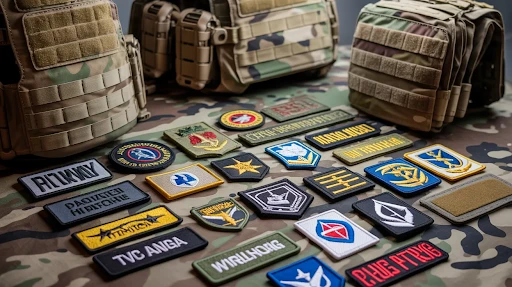
Military-style patches need more than a nice design. They need clean stitching, strong backing, accurate colors, readable text, and durable construction.
The Custom Patches USA makes patches for uniforms, tactical gear, morale designs, police departments, veteran groups, events, clubs, teams, and collectors across the country. You can order embroidered, PVC, woven, sew-on, Velcro, and specialty patches based on how the patch will actually be used.
If you need a classic stitched patch, start with custom embroidered patches.
If the patch is going on a plate carrier, range bag, outdoor jacket, or tactical kit, custom PVC patches are a smart choice.
If your artwork has tiny text or detailed symbols, custom woven patches will give you a cleaner finish.
For permanent placement on jackets, uniforms, vests, and hats, sew-on patches are the safest long-term option.
FAQs About Military Patches
What Are Military Patches Called?
Military patches may be called unit patches, shoulder sleeve insignia, morale patches, combat patches, rank patches, name tapes, branch patches, or tactical patches, depending on their purpose.
What Do Military Patches Mean?
Military patches can show unit identity, rank, service branch, national flag, deployment history, role, tactical team, mission, veteran status, or morale. Some are official uniform insignia, while others are custom or commemorative.
Can Civilians Wear Military Patches?
Civilians can wear patriotic, tactical, morale, novelty, or commemorative military-style patches. They should not wear patches in a way that falsely claims active service, military rank, combat awards, official authority, or unearned decorations.
Who Can Wear a Combat Patch?
A combat patch is tied to military eligibility rules. In the U.S. Army, it generally refers to a shoulder sleeve insignia worn by eligible soldiers for qualifying military operations in hostile conditions. It is not the same as a casual morale patch.
What Side Does an Army Unit Patch Go On?
For U.S. Army uniforms, the current unit shoulder sleeve insignia is worn on the left sleeve. Eligible combat service patches are worn on the right sleeve. Exact wear depends on current official regulations and command guidance.
What Is an OCP Patch?
An OCP patch is made for Operational Camouflage Pattern uniforms or gear. These patches usually use subdued colors like black, coyote, tan, olive drab, spice brown, or ranger green and often come with Velcro backing.
What Is the Best Backing for Military Patches?
Velcro backing is best for removable patches on uniforms, plate carriers, bags, and tactical gear. Sew-on backing is best for permanent placement on jackets, hats, uniforms, and vests.
Are PVC Patches Good for Military Use?
PVC patches are excellent for tactical gear, morale patches, range bags, outdoor use, police gear, and airsoft equipment. They resist water, dirt, and abrasion better than many thread-based patches.
Are Embroidered Military Patches Better Than PVC Patches?
Embroidered patches are better for a classic stitched look, veteran jackets, unit-inspired patches, and formal uniform-style designs. PVC patches are better for rugged tactical use, rain, mud, gear friction, and raised 2D or 3D morale designs.
What Is the Standard Size for a Military Patch?
Many shoulder patches are around 3 to 4 inches. Flag patches are often around 2 x 3 inches. Name tapes are usually longer and narrow. The right size depends on placement, uniform type, and gear panel size.
Can I Make Custom Military Patches for My Team?
Yes, you can make custom military-style patches for tactical teams, airsoft groups, veteran events, clubs, security teams, police units, fundraisers, reunions, or morale use. Use original artwork and avoid designs that falsely imply official status or unearned awards.
What Is a Morale Patch?
A morale patch is a custom patch used to show humor, team identity, attitude, mission culture, or personal style. It is common on tactical bags, plate carriers, range gear, hats, and jackets.
What Patch Type Is Best for Tiny Text?
Woven patches are usually better for tiny text and fine detail because they use thinner threads than embroidered patches. PVC can also work well if the design is molded clearly and the lettering is large enough.
Can I Order Military Patches With Velcro?
Yes. Velcro, also called hook-and-loop backing, is one of the most popular choices for military patches because it works well on OCP uniforms, tactical bags, plate carriers, and gear panels.
How Do I Choose the Right Military Patch Material?
Choose embroidery for a classic stitched look, PVC for rugged tactical use, woven for fine details, sew-on for permanent clothing placement, and Velcro backing for removable uniform or gear patches.
Ready to Start Your Military Patch Project
Military patches are not one-size-fits-all. A morale patch for a range bag needs a different material than a veteran jacket patch. An OCP patch needs different colors than a full-color commemorative patch. A police uniform patch needs a different finish than an airsoft team patch.
Start with the use case. Then choose the material, size, backing, border, and color palette around that use case.
If the patch needs to look traditional, choose embroidery. If it needs to survive rough gear use, choose PVC. If it needs small lettering, choose woven. If it needs to stay attached for years, choose sew-on. If it needs to move from one piece of gear to another, choose Velcro.
That is how you get a military patch that looks right, feels right, and lasts.