What Are Sew On Patches?
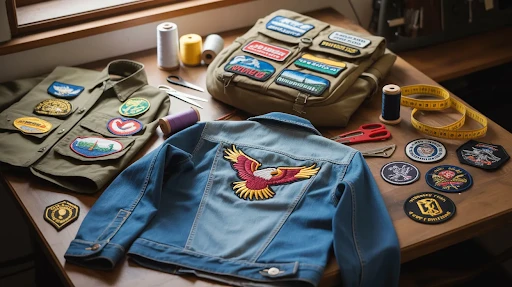
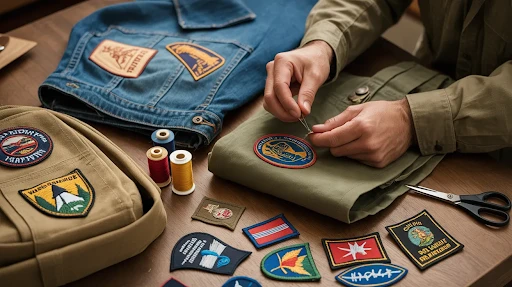
Sew on patches are decorative or functional fabric embellishments that are attached to clothing, bags, hats, and accessories using a needle and thread , either by hand or with a sewing machine. Unlike iron on patches, which use a heat-activated adhesive backing, sew on patches are stitched directly to the base fabric, making them significantly more durable, permanent, and versatile across all fabric types.
From customizing a denim jacket with cool embroidered patches to displaying earned badges on a scout vest, sewing patches onto clothes is a time-honored craft. Today, the demand for custom sew on patches has exploded across fashion, athletics, the military, corporate branding, and personal expression , and for good reason.
At The Custom Patches USA, we specialize in producing high-quality custom embroidered sew on patches for individuals, businesses, teams, clubs, and organizations across the entire United States , with no minimum order requirements and fast turnaround times.
To find out more about embroidered patches check the link here.
Types of Sew On Patches
Not all sew on patches are created equal. Before you start shopping or designing, it helps to understand the main categories available:
1. Embroidered Sew On Patches
The most popular type. Sew on embroidered patches feature thread stitched over a base fabric to create detailed, colorful designs. They are thick, durable, and have a premium tactile quality. Perfect for jackets, vests, backpacks, and uniforms.
2. Woven Sew On Patches
Woven patches are created on a loom rather than embroidered, which allows for finer detail and a flatter profile. Great for logos with small text or intricate designs.
3. Printed Sew On Patches
Digitally printed fabric patches offer photographic-quality imagery and unlimited color options. Best for highly detailed artwork.
4. Chenille Sew On Patches
Plush and textured, chenille patches (also called letterman patches) are typically found on varsity jackets and school spirit wear. They have a fuzzy, raised surface and are often sewn on by hand.
5. Leather & PVC Sew On Patches
Durable and weather-resistant, these are popular for biker vests, military gear, and outdoor apparel.
6. Sew On Name Patches
Sew on name patches are commonly used on uniforms, work wear, and military garments. They can be embroidered, woven, or printed and usually display a name, rank, or title.
7. Reflective Sew On Patches
Reflective sew on patches are used on safety gear, military uniforms, and cycling/running apparel for high-visibility applications.
8. Appliqué Sew On Patches
Sew on applique patches use layered fabric cutouts to create dimensional designs. They are often found on children’s clothing and quilts.
Sew On vs Iron On Patches: Which Is Better?
One of the most common questions we get is: “Iron on patches vs sew on, which should I choose?” Here’s a detailed comparison of Iron on patches Vs Sew on patches to help you decide:
| Feature | Sew On Patches | Iron On Patches |
| Durability | Excellent , lasts the life of the garment | Moderate , can peel with washing |
| Fabric Compatibility | Works on almost all fabrics | Not suitable for leather, nylon, polyester |
| Application Method | Needle + thread (hand or machine) | Iron / heat press |
| Skill Required | Basic sewing skills helpful | Very easy , beginner-friendly |
| Permanence | Permanent (removable with effort) | Semi-permanent |
| Best For | Jackets, jeans, uniforms, leather, hats | Quick decorative use on cotton/denim |
| Wash Resistance | Extremely high | Moderate (may need re-pressing) |
| Professional Use | Military, scouts, sports teams | Casual fashion |
The verdict: For anything that needs to last , uniforms, biker vests, letterman jackets, scout sashes , sew on patches are the clear winner. The good news? You can also sew on iron on patches if you want extra security. Simply skip the iron and stitch around the edges.
Pro Tip: Many of our customers at The Custom Patches USA choose patches with an iron-on backing AND sew the edges for ultimate durability , the best of both worlds.
How to Sew On Patches by Hand (Step-by-Step)
Learning how to sew patches on by hand is a skill anyone can master in about 30 minutes. Here’s everything you need:
What You’ll Need
- Your patch
- The garment you’re attaching it to
- A needle (sharp embroidery needle works best)
- Thread matching the patch border color (or contrasting for a decorative look)
- Fabric pins or wonder clips
- Scissors
- A thimble (especially for leather or thick denim)
- Optional: fabric chalk for placement marking
Step 1: Position Your Patch
Lay your garment flat on a firm surface. Place the patch exactly where you want it and use fabric pins to hold it in position. Step back and check the placement from a distance , once sewn, repositioning is difficult.
Step 2: Thread Your Needle
Cut about 24 inches of thread. Thread the needle and double the thread (pull both ends even) for extra strength. Tie a knot at the end.
Step 3: Start Your Stitch from the Inside
Push the needle up from the inside of the garment so the knot is hidden. Bring the needle up just outside the edge of the patch.
Step 4: Use a Whip Stitch or Running Stitch
The best stitch to sew on patches for most situations is the whip stitch (also called an overcast stitch):
- Push the needle down through both the patch and garment fabric, very close to the edge of the patch
- Pull the thread all the way through
- Bring the needle back around and repeat , spacing stitches about 2–3mm apart
- Keep tension even throughout
Alternatively, use a running stitch for a flatter, less visible result: weave the needle in and out through both layers in a straight line around the patch border.
Step 5: Work Your Way Around
Continue stitching all the way around the patch perimeter. Keep your stitches even and close to the patch edge so no fabric frays or lifts.
Step 6: Secure and Finish
When you return to where you started, tie off with 2–3 small backstitches on the inside of the garment. Cut the excess thread. Remove any pins.
Step 7: Press the Patch
Turn the garment inside out and gently press with an iron on a low setting to smooth out any puckering.
How to Sew On Patches with a Sewing Machine
If you have multiple patches or are working on thicker materials, knowing how to sew on patches with a sewing machine saves significant time.
Machine Settings
- Stitch type: Straight stitch or zigzag stitch
- Stitch length:5–3mm
- Needle: Size 80/12 for standard fabric; size 90/14 for denim; size 100/16 for leather
- Thread: Polyester all-purpose in a color that matches the patch border
- Presser foot: Standard foot or open-toe embroidery foot for visibility
Step-by-Step Machine Method
Step 1: Pin or temporarily iron the patch in place.
Step 2: Set your machine to a straight stitch and sew slowly around the patch edge, keeping the needle as close to the border as possible (about 1–2mm in).
Step 3: At corners, stop with the needle down, lift the presser foot, pivot the fabric, lower the foot, and continue.
Step 4: Overlap your starting point by about ½ inch to secure. Backstitch to lock.
Step 5: Pull thread tails to the inside and tie off. Trim.
For hats: Learning how to sew patches on hats by machine requires a free arm or cylinder arm on your machine. Go slowly and use a stiletto/awl to guide the fabric. Many home sewists use a hand sewing method for hat patches instead for better control.
How to Sew Patches on Different Materials
Different fabrics require different approaches. Here’s your material-by-material guide:
How to Sew Patches on Denim
Denim is the most forgiving material for patch application. Use a size 90/14 denim needle and polyester or cotton thread. For a decorative “punk” look, use contrasting thread.
How to sew patches on jeans follows the same basic method , the main challenge is maneuvering a leg tube under the machine, so consider hand sewing if the area is tight. When learning how to sew patches on jeans by hand, a denim needle helps push through thick fabric layers.
How to Sew Patches on Leather
Sewing patches on leather requires special considerations:
- Use a leather needle (has a wedge-shaped tip)
- Use polyester or nylon thread , never cotton on leather
- Use a thimble , leather is hard to push through
- Mark stitch holes with a leather hole punch or awl before sewing for even spacing
- Never use pins on leather , they leave permanent holes; use binder clips or leather-safe tape instead
- Can you sew patches on leather? Absolutely yes, and the result is extremely professional and permanent
How to sew patches on a leather vest is a skill every biker should know , we cover it in depth in the Biker Patches section below.
How to Sew Patches on Nylon
Can you sew patches on nylon? Yes, but nylon is slippery and lightweight. Use a sharp needle (size 70/10), fine polyester thread, and sew slowly. Stabilize the area with interfacing on the inside if the fabric warps. A teflon presser foot helps the machine glide over nylon.
How to Sew Patches on Polyester
Can you sew patches on polyester? Yes , use a stretch needle or universal needle. Avoid an iron on backing as heat can melt polyester. A hand whip stitch works extremely well.
How to Sew Patches on Cotton/Canvas
The easiest combo. Standard needle, standard thread, any stitch. Works beautifully by hand or machine.
How to Sew Patches on Different Items
How to Sew Patches on a Jacket
Jackets, especially denim jackets and leather jackets are the #1 destination for patches. Here’s how to approach them:
- Decide on your patch placement before committing. Lay all patches on the jacket and photograph for reference
- Work from the center outward if creating a full-back patch display
- For how to sew patches on a jean jacket, use a denim needle and work in sections
- For leather jackets, follow the leather instructions above
- Single-needle topstitch around each patch for a clean professional look
- When sewing patches on sleeves, stuff the sleeve with a rolled towel to keep it taut
How to Sew Patches on Jeans
For both decorative patches and denim patches to cover holes or distressing:
- Turn the jeans inside out and insert a wooden dowel or small cutting board inside the leg for stability
- Sew from the outside, keeping the leg supported
- For knee or thigh patches on thick denim, a size 100/16 heavy-duty needle is recommended
- How to sew decorative patches on jeans looks best with a contrasting whip stitch in a bold thread color
How to Sew Patches on a Backpack
How to sew patches on a backpack (or how to sew patches on a backpack by machine):
- Open all zippers and compartments to access the panel flat
- Insert a small cutting board inside the compartment to give you a solid backing surface
- For structured backpacks, hand sewing is often easier than machine
- Use a heavy-duty needle and strong polyester thread
- The backstitch is particularly good for canvas backpacks
How to Sew Patches on Hats
Sewing patches on hats is tricky due to the curved surface. Options:
- Hand sewing , most controllable; use a curved upholstery needle for structured caps
- Machine sewing , requires a cylinder arm attachment; use a hat hoop for embroidery machines
- Hat patch placement: Center front panel is standard; side panels and back are also popular
- For sew on hat patches, temporarily secure with fabric glue or pins before stitching
How to Sew Patches on Shirts
For lightweight shirts:
- Back your shirt with stabilizer or place a piece of cardboard inside during sewing
- Use a fine needle (70/10 or 75/11) and lightweight thread
- A running stitch around the patch perimeter is low-profile and won’t pull the fabric
How to Sew Patches on Pants
Whether uniform trousers or casual pants:
- Insert a pressing board or folded cardboard into the leg for support
- For military or scout uniform pants, refer to the official placement guide for your branch/organization
- Use thread matching the uniform color
How to Sew Patches on Sleeves (with Sewing Machine)
How to sew patches on sleeves with a sewing machine:
- Stuff the sleeve firmly with a towel roll
- Use the free arm of your machine if available
- Sew slowly and use a stiletto to guide fabric through tight curves
- A 2.5mm straight stitch works best; pivot at corners with needle-down
Scout & Uniform Patches: Placement & Sewing Guide
Scout patches are among the most sewn-on patches in America, with thousands of families asking each year how to sew on scout patches correctly.
How to Sew on Girl Scout Patches
Girl Scout patch placement follows official guidelines from the GSUSA:
- Brownie/Junior/Cadette/Senior/Ambassador vests have designated areas for badges, insignia, and fun patches
- Use the official placement chart from your troop’s handbook
- How to sew on girl scout patches: Use a simple running stitch or whip stitch in thread matching the patch border
- How to sew girl scout patches on vest: Lay the vest flat, pin all patches first, then sew each one before moving to the next
How to Sew on Boy Scout Patches
Boy Scout uniforms have specific regulations:
- Merit badges go on the merit badge sash, not the uniform shirt
- Rank badges, troop numbers, and council patches have specific shoulder and chest placements
- How to sew on boy scout patches correctly: use a whip stitch with khaki or tan thread around the patch border
How to Sew on Cub Scout Patches
How to sew patches on cub scout uniform and how to sew on cub scout patches:
- Follow the official Cub Scout uniform inspection sheet
- Patches are sewn on with matching thread using a whip stitch
- Parents often find a size 80/12 needle easiest for the cotton uniform fabric
How to Sew on Civil Air Patrol Patches
How to sew on civil air patrol patches (CAP):
- CAP has strict uniform regulations , always reference the CAPR 900-1 uniform manual
- Most CAP patches are sewn with Air Force blue thread using a neat whip stitch
- Shoulder patches, name tags, and specialty devices all have defined positions
| Organization | Recommended Thread Color | Best Stitch | Fabric Type |
| Girl Scouts | Match patch border | Whip stitch | Cotton/polyester vest |
| Boy Scouts | Khaki/tan | Whip stitch | Cotton twill |
| Cub Scouts | Match border | Whip stitch | Cotton twill |
| Civil Air Patrol | Air Force blue | Whip stitch | Cotton/poly blend |
Military Patches: How to Sew on Military Patches Correctly
Sewing on military patches is serious business , incorrect placement or attachment can result in uniform violations. Here’s what you need to know:
How to Sew on Military Patches by Hand
How to sew on military patches by hand:
- Reference your branch’s uniform regulation manual (AR 670-1 for Army, MCO 1020.34 for Marines, etc.)
- Identify exact patch placement using a uniform board or mannequin
- Use thread matching the uniform color (OCP patches use coyote brown thread; ACU uses gray-green)
- Stitch with a neat, tight whip stitch , stitches should not be visible on the face of the patch
- All four sides must be sewn , no open edges
How to Sew Patches on Military Uniform
- Army OCP uniform: Unit patches go on the left shoulder; combat service identification badge on the right; name tape above right breast pocket; U.S. Army tape above left breast pocket
- How to sew patches on Navy dress blues: Use dark navy thread; all patches must lie perfectly flat; a slipstitch is recommended for formal uniforms
- Sew on Army patches require matching OCP or ACU thread depending on the uniform
Sew On Military Patches We Offer
At The Custom Patches USA, we produce custom military sew on patches for:
- Unit identification patches
- Morale patches
- Name tapes
- Rank insignia
- Veteran memorial patches
All our military patches comply with size and color standards and are available with a merrowed or hot-cut border for clean sewing edges.
Biker, Letterman & Specialty Patches
How to Sew Patches on a Leather Vest (Biker)
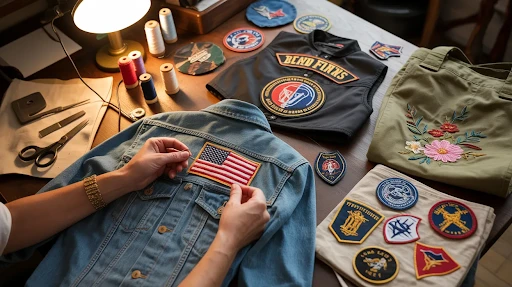
Sew on biker patches are central to motorcycle club culture. Here’s how to do it right:
- Plan your layout, MC patches typically follow a 3-piece back patch (top rocker, center emblem, bottom rocker) or a single large center back patch
- Punch stitch holes with a leather hole punch or stitching chisel for even, professional results
- Use waxed nylon or polyester thread, it won’t rot and handles weather
- Saddle stitch or whip stitch, both are traditional and durable
- Work from the center outward to avoid the leather warping
- Smaller front and sleeve patches: Use the same method on a smaller scale
How to sew patches on leather vest by hand: The saddle stitch (using two needles simultaneously, one on each side) is the strongest possible stitch for leather and is what professional leather workers use.
Near you? Search for “places that sew patches on leather near me” or visit a local leather shop/tailor. Alternatively, if you’re doing it yourself, The Custom Patches USA can produce your custom biker patches ready with a clean-cut sew-on edge.
Letterman Jacket Patches: How to Sew on Chenille Patches
How to sew patches on a letterman jacket, specifically chenille patches , requires extra care due to their weight and texture:
- Who can sew patches on a letterman jacket? Any skilled tailor, your school’s booster club, or yourself with patience
- Thread: Use heavy-duty upholstery thread in a color matching the jacket felt
- Needle: Heavy curved needle or straight upholstery needle
- How to sew on chenille patches: Align carefully, pin, then use a strong whip stitch pulling through all layers
- Places that sew patches on letterman jackets: Look for letter jacket specialty shops, local tailors, or search “sew patches on letterman jacket near me”
- How to hand sew patches on letterman jacket: Sew through all layers including the jacket wool body, stitches should be tight and close together (every 3mm)
| Patch Type | Needle Size | Thread Type | Best Stitch |
| Chenille (Letterman) | Heavy curved | Upholstery thread | Whip stitch |
| Embroidered Denim | 90/14 denim | Polyester | Straight / Whip |
| Leather Back Patch | Leather needle | Waxed nylon | Saddle stitch |
| Scout Badge | 80/12 universal | Cotton/poly | Whip stitch |
| Military Patch | 80/12 universal | Matching color | Whip stitch |
| Hat Patch | 75/11 sharp | Fine polyester | Whip stitch |
Custom Sew On Patches: Design Your Own
Whether you’re a business, sports team, motorcycle club, or individual looking for personalized sew on patches, ordering custom patches has never been easier.
Why Order Custom Sew On Patches?
- Brand recognition, logos, slogans, mascots
- Team identity, uniform patches for sports teams
- Event memorabilia, commemorative patches for races, rallies, reunions
- Personal expression, your own artwork, initials, favorite designs
- Organizational use, clubs, associations, first responders
What to Consider When Designing Custom Sew On Patches
- Size From small sew on name patches (1″×3″) to extra large sew on patches (12″+ back patches). Size affects detail resolution, very fine text or lines need a larger patch.
- Shape Circle, rectangle, shield, die-cut custom shape , the choice is yours. Die-cut patches follow the exact outline of your artwork.
- Thread Count / Embroidery Coverage 50%, 75%, or 100% thread coverage (fully embroidered). Higher coverage = more premium look.
- Border Type
- Merrowed border , overlocked edge, slightly raised, most common
- Hot-cut border , cut to shape with a heat knife for clean edges on complex shapes
- Laser-cut border , ultra precise for intricate shapes
- Backing
- Sew-on only (plain felt/twill backing)
- Iron-on + sew-on (heat seal backing + manual stitching option)
- Velcro backing (for tactical/military applications)
- Quantity
At The Custom Patches USA, we offer custom sew on patches with no minimum , order even a single patch, or get bulk pricing for larger runs.
How to Order Custom Sew On Patches in the USA
- Visit com
- Upload your artwork or use our design team’s help
- Choose size, shape, border, and backing
- Get a free digital proof within 24 hours
- Approve and receive your patches , typically in 7–14 business days
Custom Patch Types We Offer
| Patch Type | Best For | Min Order |
| Custom Embroidered Patches | Jackets, uniforms, hats | No minimum |
| Custom Woven Patches | Fine detail logos | No minimum |
| Custom Chenille Patches | Letterman jackets | No minimum |
| Custom Iron On Patches | Quick application | No minimum |
| Custom Name Patches | Workwear, uniforms | No minimum |
| Custom PVC Patches | Tactical, outdoor | No minimum |
| Custom Biker Patches | MC vests | No minimum |
Where to Find Sew On Patches Near You
If you’re searching “sew on patches near me” or “places that sew on patches near me”, here are your main options:
1. Order Online from The Custom Patches USA (Recommended)
Get custom sew on patches shipped anywhere in the USA. We serve customers in all 50 states. Fast shipping, no minimum order, free artwork assistance.
2. Craft Stores
Michaels sew on patches, Michaels carries a selection of pre-made embroidered patches in their sewing section. Good for standard designs but limited customization.
3. Fabric & Sewing Stores
Local fabric stores and sewing supply shops often carry a variety of clothing patches sew on styles.
4. Tailors & Alterations Shops
If you’re asking “who can sew patches on a letterman jacket” or “who can sew on patches near me”, a professional tailor is your best bet. Search “places that sew patches near me” on Google Maps.
5. Motorcycle & Biker Shops
For sew on biker patches and leather vest work, many HD dealerships and independent biker shops offer patch sewing services or can recommend local leather workers.
6. Scout Councils & Uniform Shops
Official scout shops carry sew on scout patches for Girl Scouts, Boy Scouts, and Cub Scouts in official designs.
Best Stitches & Pro Tips for Sewing Patches
The Best Stitches to Sew On Patches
| Stitch Type | Best For | Skill Level |
| Whip Stitch | All patch types , most common | Beginner |
| Running Stitch | Lightweight fabrics, discreet look | Beginner |
| Backstitch | Maximum strength, backpacks, leather | Intermediate |
| Blanket Stitch | Decorative, visible, artsy look | Intermediate |
| Saddle Stitch | Leather, biker vests | Advanced |
| Machine Zigzag | Fast application, bulk patching | Machine required |
| Machine Straight Stitch | Clean edges, denim | Machine required |
Pro Tips for Perfect Patch Application
- Always press your garment before applying patches , wrinkles create placement errors
- Use a light box or window to check placement from the front of the garment
- Sew in good lighting , a magnifying lamp helps see stitches clearly
- The easy way to sew on patches: temporarily secure with fabric glue stick, let dry, then sew
- Best way to sew on patches for beginners: Use an iron-on patch and iron it first to hold placement, then hand stitch the border
- Cost to sew on patches professionally: Tailors typically charge $5–$15 per patch depending on size and fabric
- For bulk patching, invest in a sewing machine to sew patches on hats with a cylinder arm , it pays for itself quickly
- Converting sew-on patches to velcro: A sew-on patches velcro conversion involves sewing one side of velcro to the patch back and the other side to the garment , great for interchangeable tactical gear
Frequently Asked Questions
Can you sew iron on patches?
Yes , you can sew iron on patches just like regular sew-on patches. In fact, many people iron them on first to hold placement, then sew the edges for extra permanence. This is the best way to make iron on patches last on high-stress garments.
What’s the difference between iron on and sew on patches?
The key difference between iron on and sew on patches is the backing. Iron on patches have a heat-activated adhesive on the back; sew on patches have plain fabric. Sew on patches are more durable and work on more fabric types. Iron on patches are faster and easier but may peel over time.
How to sew on patches by hand for a beginner?
Start with a needle, doubled thread, and a whip stitch. Pin the patch, bring the needle up from underneath at the patch edge, and stitch around the perimeter every 2–3mm. Tie off and trim.
What is the best stitch to sew on patches?
The whip stitch is the most popular and easiest. The backstitch is the strongest. The blanket stitch is the most decorative. For machines, a straight stitch 1–2mm from the edge is clean and professional.
Can you sew patches on leather?
Absolutely. Use a leather needle, waxed nylon or polyester thread, pre-punch holes with an awl, and use a saddle stitch or whip stitch. Never use pins , use binder clips. The result is extremely strong and professional.
Can you sew patches on nylon?
Yes. Use a sharp fine needle (70/10), polyester thread, and sew slowly. Avoid pulling too tight as nylon can pucker. Stabilize with interfacing if needed.
Can you sew patches on polyester?
Yes. Use a universal or stretch needle. Avoid the iron-on method on polyester (risk of melting). A hand whip stitch or machine straight stitch works perfectly.
Where can I find places that sew patches on me near me?
The Custom Patches USA is your stop for sew on patches, while you can try local tailors, alterations shops, uniform stores, or biker/leather shops. You can also search “patches sew on near me” on Google Maps.
How to sew patches on a hat?
Use a curved needle for hand sewing. Stuff the hat firmly with a rolled towel. Sew slowly with a tight whip stitch. For machine sewing, you’ll need a free arm or cylinder arm machine. Hand sewing gives the most control on curved surfaces.
How do I sew on patches with a sewing machine?
Pin or iron the patch in place. Use a straight stitch at 2.5–3mm, sew close to the patch edge (1–2mm in), pivot at corners with needle down, and backstitch to start/end. See the full machine method above.
How to make sew on patches at home?
Cut your desired fabric shape, back it with interfacing for stability, finish the edges with a zigzag stitch or serger, and decorate with embroidery or fabric paint. Alternatively, print on printable fabric sheets.
How to sew on girl scout patches correctly?
Follow the official GSUSA placement chart for your level (Brownie, Junior, Cadette, etc.). Use a simple whip stitch in thread matching the patch border. Pin everything first, step back to check placement, then sew. The loop or sash should be laid flat on a hard surface during sewing.
How to sew on boy scout patches and cub scout patches?
Reference the BSA uniform inspection sheet. Use tan/khaki thread matching the uniform. Whip stitch around the border, keeping stitches tight and even. Cub Scout uniform patches go on cotton twill, so a standard needle works well.
How to sew on civil air patrol patches?
Reference CAPR 900-1. Use Air Force blue thread. Whip stitch around each patch border. All patches must lie flat against the uniform with no bunching.
How do I sew patches on a navy dress blue uniform?
Use dark navy thread. A slipstitch (also called a ladder stitch) gives a very clean, barely-visible result for formal uniforms. Keep stitches tiny and even. Reference the Navy’s uniform regulations for exact placement.
Who can sew patches on my letterman jacket near me?
Look for letter jacket shops, sports uniform stores, tailors, or dry cleaners that offer alterations. Search “sew patches on letterman jacket near me” on Google Maps. Alternatively, a skilled DIYer with a heavy-duty needle and upholstery thread can do it at home.
What is a velcro conversion for sew on patches?
A sew-on patches velcro conversion means attaching a velcro (hook-and-loop) strip to an existing sew-on patch so it becomes removable. You sew one piece of velcro to the patch back and the corresponding piece to the garment. Popular for tactical vests, bags, and interchangeable uniforms.
Do you offer custom sew on patches with no minimum order?
Yes! At The Custom Patches USA, we offer custom sew on patches with no minimum order. Whether you need 1 patch or 10,000, we’ve got you covered with the same high quality and fast turnaround.
What are the most popular designs for sew on patches?
Current popular designs include:
- Skull sew on patches, biker and gothic fashion
- Marvel sew on patches, fandom and pop culture
- Football sew on patches, team spirit
- Unicorn sew on patches, children’s fashion
- Tiger sew on patches, retro aesthetic
- Mushroom sew on patches, cottagecore trend
- Funny sew on patches, novelty and humor
- Army and military sew on patches, heritage and pride
- Harley Davidson sew on patches , motorcycle culture
- Christian sew on patches , faith expression
- Dallas Cowboys sew on patches, NFL fandom
- Reflective sew on patches, safety and tactical
Wrapping Up
Whether you’re customizing a jacket, completing a scout uniform, personalizing your backpack, displaying your motorcycle club colors, or outfitting an entire team, sew on patches are one of the most versatile, durable, and expressive tools in the world of fashion and personal identity.
Ready to create your own? The team at The Custom Patches USA is ready to help you design and produce custom embroidered sew on patches that are built to last , with free design assistance, no minimums, and fast USA shipping.