
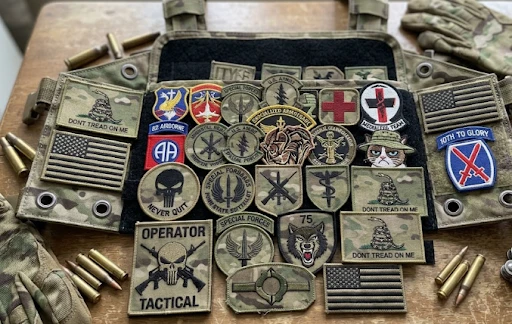
Meta Title:
OCP Patch Placement Guide: Army/Air Force Uniform Rules
Meta Description:
Complete OCP patch placement guide covering Army OCP badge placement and Air Force OCP patches placement with official regulation locations and sizing tips.
OCP Patch Placement: The Complete Guide to Army and Air Force Uniform Regulations
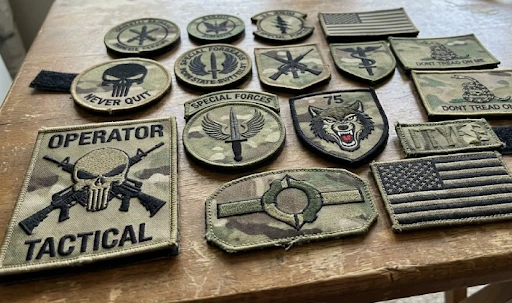
Getting OCP patch placement right is not optional for service members, unit supply sergeants, or family members preparing a uniform for a ceremony. The Operational Camouflage Pattern (OCP) uniform has specific, regulation-driven locations for every patch, tape, and insignia, and a single misplaced patch can mean a failed inspection or an uncomfortable correction from a first sergeant.
This guide walks through military uniform patch placement requirements for both the Army and the Air Force, explains the reasoning behind each location, and gives practical measurements you can use whether you are prepping for a formation, a promotion ceremony, or simply replacing worn insignia.
Whether you are searching for US Army patches placement rules under AR 670-1 or USAF OCP patches placement under AFI 36-2903, this article covers every placement point on the blouse, trousers, and headgear. We also explain how patches on Army uniform items differ from patches on military uniform items worn by other branches, since placement conventions are not identical across services.
Why OCP Patch Placement Matters
Military placement standards exist for three reasons: uniformity across formations, rapid visual identification of rank and unit in the field, and accountability during inspections. Unlike civilian apparel, where patch placement is a matter of style, military uniform patch location is dictated by written regulation, measured in inches from fixed reference points such as the shoulder seam or the center of the pocket flap.
Getting army uniform patch placement wrong is one of the most common uniform discrepancies noted at drill and ceremony inspections. Supply sergeants and detail leads frequently field the same questions: How high does the flag sit? Which side does the unit patch go on? And how do combat patches differ from peacetime shoulder sleeve insignia? This guide answers all three, along with Air Force uniform patch locations for OCP wear.
Army OCP Patch Placement (AR 670-1)
Army OCP badge placement follows Army Regulation 670-1, which governs the wear and appearance of Army uniforms and insignia. Below is a breakdown of the required locations for patches on Army uniform blouses.
Name Tape and US Army Tape
The name tape is centered on the right chest pocket flap, positioned midway between the top and bottom of the flap. The U.S. Army tape sits in the same position on the left chest pocket flap, mirroring the name tape. Both tapes are sewn flat with no visible gap between the tape edge and the flap seam.
US Flag Patch
The subdued American flag patch is worn on the right shoulder pocket, centered, with the stars facing forward (the “reverse flag” convention, since a flag carried into battle traditionally trails backward). This is one of the most frequently misapplied elements of army patches uniform setup, since civilian buyers often assume the flag should read normally left to right.
Shoulder Sleeve Insignia (Unit Patch)
The current unit patch, referred to formally as the Shoulder Sleeve Insignia (SSI), is centered on the left shoulder sleeve, one half inch below the shoulder seam. This is the patch most people mean when they ask about army patches location on a duty uniform.
Combat Patch (Former Wartime Service)
Soldiers who have deployed in support of a designated combat operation may wear the unit patch of that deployment on the right shoulder sleeve in the identical position as the left shoulder unit patch. This is commonly called the “combat patch” or “Shoulder Sleeve Insignia-Former Wartime Service” (SSI-FWTS). Only one combat patch is worn at a time, representing the most recent qualifying deployment.
Rank Insignia
Enlisted rank is worn centered on the front of the ILBE (Improved Load Bearing Equipment) collar area or on hook-and-loop tabs at the center of the chest, depending on current directives. Officer rank is worn on hook-and-loop tabs in the same central chest position. Exact placement guidance is updated periodically, so units should confirm current-year specifications before ordering.
Branch Tape and Skill Badges
The branch of service tape, when required, is positioned above the name tape. Skill badges such as jump wings, air assault badges, and marksmanship badges are worn above the left pocket, stacked in order of precedence with the senior badge closest to the shoulder seam.
Looking for precisely sized SSI patches, branch tapes, or combat patches cut to Army specification? Contact us for a custom army patch quote, and we will match the backing type (hook and loop or sew-on) to your unit’s supply requirements.
Air Force OCP Patch Placement (AFI 36-2903)
The Air Force OCP patches placement is governed by Air Force Instruction 36-2903, which sets slightly different conventions than the Army for patches for Army uniform items, even though both services use the same OCP fabric pattern.
Name Tape and US Air Force Tape
The name tape is centered on the right chest pocket, and the U.S. Air Force tape is centered on the left chest pocket, matching Army convention in general layout but differing in required font and tape color specifications outlined in AFI 36-2903.
US Flag Patch
Air Force uniform patch locations for the flag patch place it on the left shoulder, centered, one half inch below the shoulder seam, which is a key difference from the Army’s right-shoulder flag placement. This distinction is one of the most searched aspects of OCP patches Air Force placement, since buyers ordering for a spouse or family member sometimes default to Army conventions by mistake.
Squadron and Duty Identifier Patches
Squadron patches, when authorized for wear, are placed on the right shoulder pocket, centered. Duty identifier patches (such as those denoting a specific mission or organization) follow local wing guidance but are typically placed above the right pocket flap or on the pocket itself, depending on current squadron policy.
Rank Insignia
Air Force enlisted and officer ranks are worn centered on the front of the uniform at chest level using the same hook-and-loop convention as the Army, though grade insignia design differs between services.
Name Tape Variations for Flight Duty
Aircrew and flight-suit personnel follow a separate set of placement rules under AFI 36-2903 for flight suits, which is a distinct garment from the OCP field uniform blouse. If you are ordering USAF OCP patches placement items for flight duty rather than garrison duty, confirm which uniform type applies before finalizing patch dimensions.
ALT Text: A collection of tactical and military-style OCP patches on a wooden table.
Comparing Army and Air Force Patch Conventions
The table below summarizes the core differences in military uniform patch placement between the two services, since this comparison is one of the most common points of confusion when ordering patches for uniforms across a mixed-service family or unit.
| Element | Army Placement | Air Force Placement |
| US Flag Patch | Right shoulder pocket | Left shoulder, half inch below seam |
| Unit/Squadron Patch | Left shoulder sleeve | Right shoulder pocket |
| Combat/Deployment Patch | Right shoulder sleeve | Governed by separate wing guidance |
| Name Tape | Right chest pocket flap | Right chest pocket |
| Service Tape | Left chest pocket flap | Left chest pocket |
Understanding these differences matters most when a family member is preparing patches army uniform items for more than one service member, or when a unit supply room is filling a mixed order. Morale patches are also popular among Air Force personnel to keep squadron morale high. When permitted, they must replace your standard unit patch and are placed centered on the right sleeve, directly underneath the U.S. flag.
Marine Corps and Navy Patch Placement
Marine Corps uniform patch placement and Navy uniform patch placement follow their own distinct regulations and are not interchangeable with OCP standards. The Marine Corps does not use the OCP pattern for its standard combat utility uniform, wearing MARPAT instead, and Marine Corps patch placement rules are governed by separate Marine Corps orders rather than AR 670-1 or AFI 36-2903.
The Navy, when wearing OCP-pattern uniforms in certain joint or expeditionary roles, generally follows Navy-specific guidance for Navy OCP patch placement that can differ from both Army and Air Force conventions, particularly around name tape wording and rank device placement.
Anyone ordering Marine Corps and Navy uniform patches should confirm current service-specific placement requirements before production, since applying Army or Air Force placement rules to a Marine Corps or Navy uniform is one of the most common ordering mistakes among family members and unit administrators unfamiliar with cross-service differences.
Sizing and Backing Considerations for OCP Patches
Correct uniform patches army placement depends on ordering the correct patch dimensions in the first place. Most OCP shoulder patches measure approximately 3 to 3.5 inches, matching the standard shoulder sleeve insignia size specified in regulation. Pocket patches such as name tapes typically measure 1 inch by 5 inches, matching the standard pocket flap width.
Backing type also affects placement accuracy. Hook-and-loop (Velcro-style) backing allows for quick swaps between duty uniforms and is the most common choice for army uniform with patches that change frequently, such as unit patches following a reassignment. Sew-on patch backing offers a more permanent, inspection-ready finish and is often preferred for name tapes and flag patches that rarely change. The U.S. Army uses PVC patches, largely for tactical gear, backpacks, plate carriers, and morale patches, because of their long-lasting durability.
Frequently Asked Questions
Where does the US flag patch go on an Army OCP uniform?
On the Army OCP uniform, the US flag patch is worn on the right shoulder pocket, centered, with the stars facing forward toward the front of the uniform. This is known as the reverse flag convention, since the flag is displayed as if it were mounted on a staff carried into battle, with the stars leading. This placement applies to the standard OCP field uniform blouse and does not apply to dress uniforms, which follow separate regulations. Soldiers preparing for inspection should confirm the flag patch is centered on the pocket rather than offset, since off-center placement is one of the most commonly cited discrepancies during formation checks.
How high does the unit patch sit on an Army uniform sleeve?
The Shoulder Sleeve Insignia, commonly called the unit patch, is centered on the left shoulder sleeve and positioned one half inch below the shoulder seam. This measurement is taken from the top of the patch to the seam, not from the center of the patch. Soldiers who have deployed in support of a qualifying combat operation may also wear a combat patch in the identical position on the right shoulder sleeve. Only the most recent qualifying deployment patch is worn on the right shoulder, and older combat patches are not stacked or worn simultaneously.
Is Air Force patch placement the same as Army patch placement?
No, Air Force and Army patch placement differs in several key locations even though both services wear the same OCP fabric pattern. The most notable difference is the flag patch, which sits on the right shoulder for the Army and the left shoulder for the Air Force. Squadron patches for the Air Force are typically placed on the right shoulder pocket, while the Army places its unit patch on the left shoulder sleeve. Because of these differences, patches ordered for one service should not be assumed to fit the placement conventions of the other, even when the fabric pattern and general uniform cut appear identical.
What size should an OCP shoulder patch be?
A standard OCP shoulder patch, such as a unit shoulder sleeve insignia, typically measures approximately 3 to 3.5 inches depending on the specific unit design and regulation requirement. Name tapes and service tapes worn on the chest pockets are generally 1 inch by 5 inches to match the width of the standard pocket flap. Ordering patches outside these dimensions can result in a patch that overhangs the pocket flap or fails to align with the shoulder seam reference point, which is why confirming the exact measurements before production is recommended for any unit or individual order.
Ordering Custom OCP Patches Built to Regulation Size
Unlike patch sellers who offer only standard commercial sizing, the team at The Custom Patches USA cuts patches on uniform orders to the exact dimensions specified in AR 670-1 and AFI 36-2903, so your OCP patch placement sits correctly the first time without trimming or resizing.
We also stock subdued thread colors matched to current OCP specifications, since standard full-color military patches are not authorized for garrison wear on the OCP uniform.
Ready to order patches sized and colored to current regulation? Start your custom OCP patch order today by contacting us, and our design team will confirm placement, sizing, and backing before production.